Smarter Hydraulic Management with RFID Tagging
Hydraulic hose failures rarely happen at a convenient time. When they do, the biggest delays are often not the repair itself, but identifying the correct hose, confirming specifications, and understanding what has failed before. As hydraulic systems become more complex and assets more widely distributed, traditional hose identification methods are struggling to keep up.
RFID tagging offers a more structured, data-led approach to hydraulic hose management. By attaching a unique digital identity to each hose, maintenance teams gain instant access to accurate build data, service history, and asset records. The result is faster breakdown response, improved preventative maintenance, and better long-term control of hydraulic systems.
The Growing Challenge of Managing Hydraulic Hoses at Scale
As fleets grow and equipment operates across multiple sites, managing hydraulic hoses becomes increasingly difficult. What once worked for a small number of machines quickly breaks down when assets multiply and records become fragmented.
Without a reliable system for identifying hoses and tracking their history, maintenance teams are left reacting rather than managing. This is where digital tracking starts to matter.
The Cost of Poor Hose Identification
When a hose fails and cannot be clearly identified, downtime increases immediately. Engineers may need to remove the hose just to measure it, cross-reference fittings manually, or build a replacement based on assumptions. This creates delays and increases the risk of incorrect replacements being fitted.
Over time, poor identification also leads to repeated failures. Without knowing when a hose was last replaced, what pressure rating was used, or whether similar hoses have failed before, the same issues are often repeated across the system.
Why Manual Records and Labels Fall Short
Paper records, spreadsheets, stamped ferrules, and printed labels all have limitations in harsh hydraulic environments. Labels fade, tags are damaged, and records are rarely updated consistently across teams or sites.
Even when records exist, they are often disconnected from the actual asset. A spreadsheet in an office does little to help an engineer standing next to a failed hose at 2am on a construction site.
What Is RFID Tagging in Hydraulic Systems?
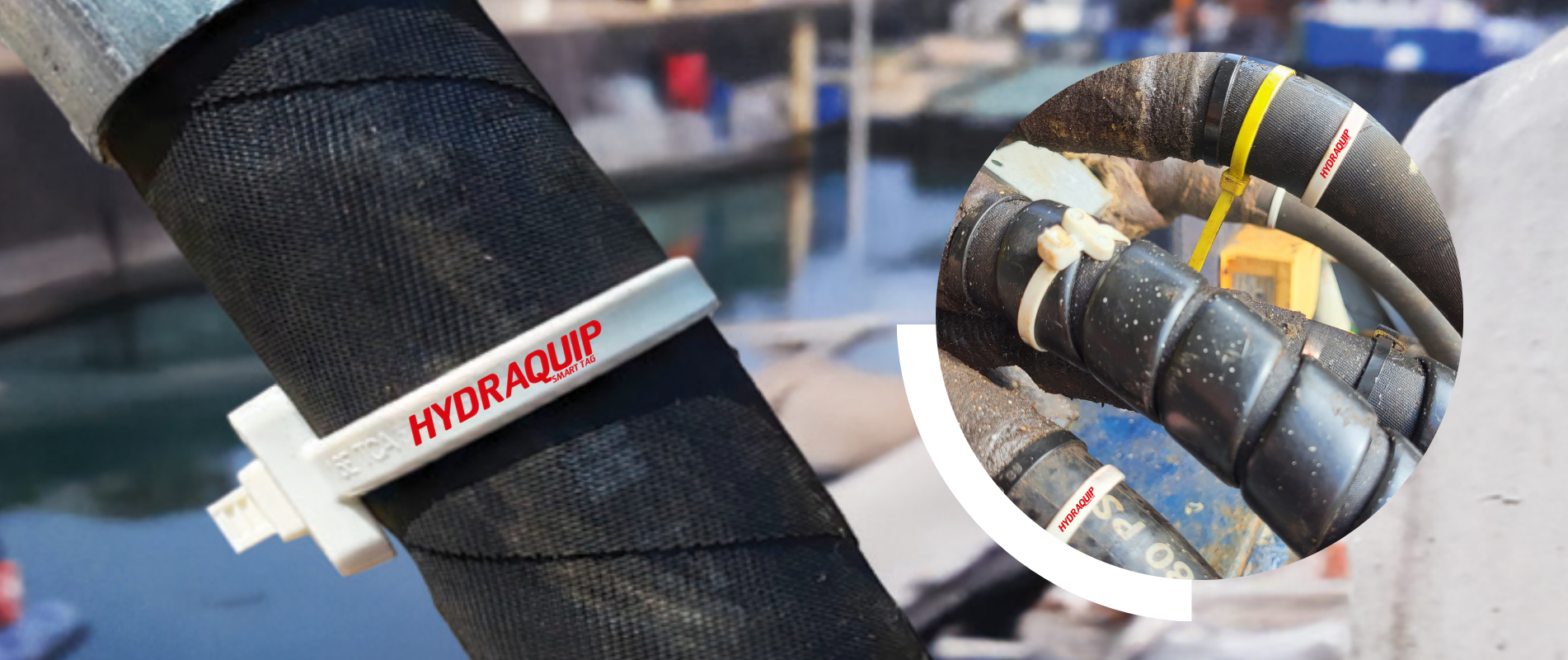
RFID tagging introduces a digital layer to hydraulic hose management. Each hose is fitted with a small, durable RFID tag that stores a unique identifier linked to a digital record.
Rather than relying on visual markings or manual look-ups, engineers can retrieve hose data instantly using a reader, even in dirty or low-visibility conditions.
How RFID Tags Work on Hydraulic Hoses
Most hydraulic applications use passive RFID tags, which do not require a power source. These tags are embedded or securely attached to the hose assembly and can be read using a handheld device.
When scanned, the tag pulls up a digital record containing information such as hose size, length, fittings, pressure rating, date of manufacture, and service history. This information is stored securely and updated each time the hose is serviced or replaced.
RFID vs Traditional Hose Tagging Methods
Unlike barcodes or printed labels, RFID tags do not require line-of-sight to be read. They are more resistant to oil, dirt, abrasion, and environmental wear.
Traditional tagging methods rely heavily on manual input and visual checks, which are prone to error. RFID provides consistency, accuracy, and speed, particularly in high-pressure breakdown situations.
Safety, Compliance, and Traceability Benefits
Hydraulic hose failures are not just costly; they can be dangerous. RFID tagging supports safer systems by improving oversight and accountability.
Clear records make it easier to demonstrate compliance and reduce risk.
Supporting LOLER, PUWER, and Site Safety Standards
Accurate hose records support compliance with regulations such as LOLER and PUWER by providing clear evidence of inspection and maintenance activity.
RFID records help demonstrate that hoses are suitable for their application and are being maintained responsibly.
Reducing Risk Through Better Hose Oversight
By understanding hose age, usage, and failure history, high-risk hoses can be identified before they fail.
This reduces the likelihood of catastrophic failures, oil spills, and unplanned safety incidents on site.
Is RFID Tagging Right for Your Hydraulic Systems?
RFID tagging is not limited to one industry or system size. It scales effectively from individual machines to large, multi-site operations.
The key is understanding where the greatest value lies.
Operations That Benefit Most from RFID
Operations with large fleets, multiple sites, or critical uptime requirements benefit most from RFID tagging. These environments generate the volume of data needed to see clear returns from improved visibility and control.
Common Misconceptions About RFID in Hydraulics
Some assume RFID is expensive or complex to implement. In reality, the technology is robust, cost-effective at scale, and designed for harsh industrial environments.
When compared to the cost of repeated downtime and incorrect repairs, RFID often pays for itself quickly.
Smarter Hose Management Starts with Better Data
Hydraulic systems are only as reliable as the information used to maintain them. RFID tagging transforms hose management from a reactive task into a structured, data-driven process.
By improving identification, record keeping, and visibility, RFID helps reduce downtime, improve safety, and extend the life of hydraulic systems. Supported by experienced engineers and integrated digital systems, it represents a smarter way to manage hydraulic assets across the UK with Hydraquip Hose & Hydraulics.
Get in touch on the below today and explore how our 24/7 service works and how RFID tagging supports faster, more reliable hydraulic hose repairs nationwide.
Phone: 0345 812 0212
Email: sales@hydrauip.co.uk

