Hydraulic Hose Assemblies for the Marine Industry
Hydraulic systems are vital to the safe and efficient operation of marine vessels. From steering controls and winches to hatch covers and propulsion systems, hydraulics deliver the power and precision needed to keep ships and offshore equipment running smoothly.
In these demanding environments, hose assemblies face constant exposure to saltwater, vibration, and extreme pressures, conditions that can quickly compromise performance if the wrong components are used.
At Hydraquip Hose & Hydraulics, we manufacture and supply marine-grade hydraulic hose assemblies designed to withstand the harshest offshore conditions. Built with corrosion-resistant fittings, reinforced hoses, and certified materials, our assemblies support critical operations across ports, vessels, and offshore platforms.
In this article, we’ll explore how hydraulics power marine systems, the specific hose requirements for this industry, and how Hydraquip’s 24/7 service and nationwide coverage keep marine operations running without interruption.
The Role of Hydraulic Systems in Marine Operations
Hydraulic systems are the backbone of many onboard and offshore functions, providing the controlled force needed for movement, lifting, and positioning in applications where reliability and safety are paramount.
In marine environments, these systems must perform consistently despite high humidity, salt exposure, and constant motion, making the integrity of every hose assembly critical.
Hydraulics are used extensively throughout both commercial and naval vessels, as well as in port and offshore equipment. Each application demands hose assemblies capable of handling specific pressure ranges, temperatures, and environmental stresses.
Common Hydraulic Applications on Vessels
Hydraulic hoses are found throughout marine machinery, serving essential systems such as:
- Steering and propulsion systems – for reliable directional control and manoeuvrability.
- Deck cranes, winches, and windlasses – for lifting heavy loads safely and efficiently.
- Hatch covers and stabilisers – ensuring watertight operation and vessel stability.
- Engine room machinery and control systems – where hydraulic pressure supports pumps, valves, and auxiliary systems.
Each of these applications relies on durable, high-specification hose assemblies capable of withstanding both internal pressure and the external marine environment.
Offshore and Port Support Applications
Beyond onboard systems, hydraulic hoses are integral to a range of offshore and port-side operations. Support vessels, dredgers, loading arms, and dockside handling equipment all depend on hydraulics to deliver smooth and dependable performance.
Here, the ability to resist corrosion, maintain flexibility under pressure, and perform reliably in exposed coastal environments is essential, qualities that start with the correct hose construction and material selection.
Next, we’ll look at what makes hose assemblies suitable for marine use, from materials and design considerations to compliance with international standards.
Hose Assembly Requirements in the Marine Sector
Marine hydraulic systems operate under conditions that push components to their limits. Saltwater exposure, temperature fluctuations, high pressure, and constant vibration mean that every hose must be engineered to deliver reliable performance and long service life. Hose assemblies used at sea aren’t simply industrial-grade, they’re purpose-built to meet the safety, environmental, and compliance requirements of the marine industry.
A well-designed marine hose assembly combines precision engineering with certified materials, ensuring performance and safety in the harshest environments. Selecting the right hose is not just about pressure rating; it’s about long-term resistance to corrosion, fire, and mechanical stress.
Environmental and Performance Demands
Marine environments are uniquely challenging. Hoses must resist degradation caused by salt spray, UV light, oil, and chemical exposure. Temperature swings, from freezing dockside mornings to engine room heat, also affect hose elasticity and sealing performance.
In addition, the continuous motion of the vessel subjects hoses to vibration and flexing, which can lead to fatigue or failure if the wrong materials are used. That’s why reinforcement layers, abrasion-resistant outer covers, and high-quality crimped fittings are crucial for maintaining integrity under load.
Compliance and Certification Standards
In marine applications, compliance is non-negotiable. Hose assemblies must meet international classification and safety standards to ensure suitability for use aboard vessels and offshore platforms.
Approvals from recognised bodies such as DNV, Lloyd’s Register, and ABS confirm that assemblies meet strict fire resistance, pressure containment, and burst performance criteria. Standards like ISO 15540 and ISO 15541 define fire resistance testing, while EN ISO 4413 outlines design and safety requirements for hydraulic systems.
Hydraquip’s marine hose assemblies are built and tested to meet or exceed these standards, giving operators confidence in every installation.
Construction and Material Selection
Durability begins with design. Marine hoses typically feature synthetic rubber inner tubes compatible with hydraulic oils, steel or textile reinforcement for strength, and protective outer layers resistant to seawater and abrasion.
Stainless-steel fittings are preferred for their corrosion resistance, especially in exposed decks or offshore locations. In particularly harsh or high-risk environments, flame-retardant or thermoplastic hose options can offer added safety and weight advantages.
Hydraquip’s team works with engineers to specify the ideal combination of materials and fittings for each system, balancing flexibility, performance, and longevity.
Maintenance and Inspection of Marine Hydraulic Hoses
Even the highest-quality hose assemblies will degrade over time if exposed to constant pressure cycles, movement, and saltwater. For marine operators, routine maintenance and inspection are essential to prevent hydraulic leaks, system failures, or costly downtime. A single hose failure can stop vital operations and compromise safety on board.
Effective maintenance starts with a structured inspection programme and a clear understanding of how hoses wear in demanding marine environments.
Common Failure Points and Warning Signs
Hydraulic hose failures are often progressive, developing gradually before becoming critical. The most common causes include:
- Abrasion from contact with other components or deck surfaces.
- Corrosion of fittings due to saltwater ingress.
- Incorrect routing leading to kinks or excessive flexing.
- Ageing of hose materials under heat and UV exposure.
Visible warning signs such as cracking, blistering, bulging, or fluid weeping indicate that the hose should be replaced immediately. Early detection not only prevents equipment downtime but also protects personnel and the environment from potential hydraulic oil leaks.
The Value of On-Site Hose Replacement Services
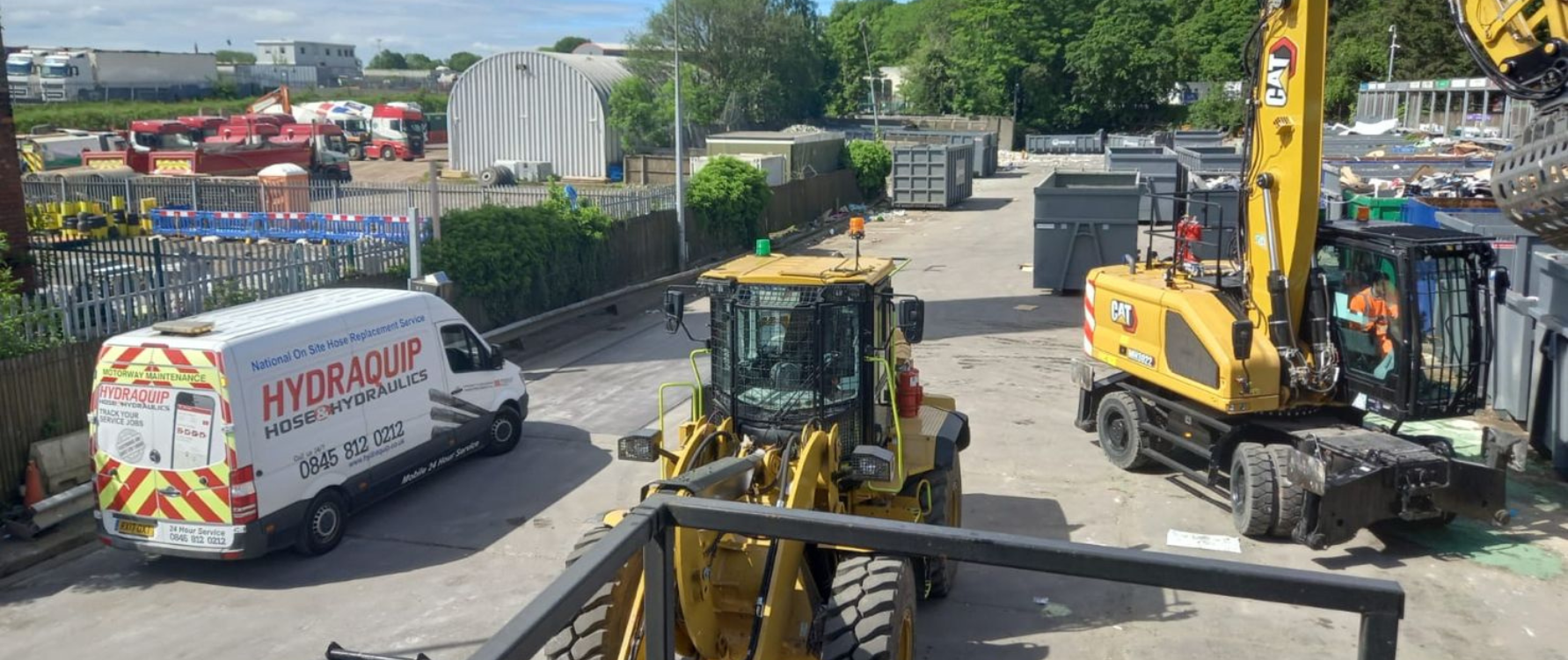
When breakdowns occur, rapid response is critical. Hydraquip’s 24/7 mobile hose repair service provides immediate support at ports, shipyards, and offshore installations across the UK. Our engineers arrive equipped with fully stocked vans capable of producing new hose assemblies on site, ensuring systems are restored quickly and safely.
With access to a wide range of marine-grade hoses, stainless-steel fittings, and adaptors, our team delivers first-time fixes that meet or exceed OEM standards, keeping vessels and dockside operations on schedule.
Preventive maintenance is only one part of operational resilience. In the next section, we’ll look at how Hydraquip’s 24/7 marine support network minimises downtime and maintains vessel readiness through rapid response, advanced tracking, and nationwide coverage.
Minimising Downtime with Hydraquip’s 24/7 Marine Support
In marine operations, downtime isn’t just inconvenient, it’s expensive. A single hydraulic failure can delay cargo handling, interrupt offshore work, or immobilise a vessel, often costing thousands per hour in lost productivity.
Hydraquip’s 24/7 support is designed to prevent these losses by delivering rapid, reliable hydraulic repairs and replacements anywhere in the UK.
Our nationwide network of mobile engineers, combined with our Job Manager technology, ensures that every breakdown is handled efficiently from the moment the call is logged to the moment the vessel is back in operation.
Rapid Response Nationwide
Hydraquip operates one of the UK’s largest fleets of mobile hydraulic hose repair vans, strategically located to provide coverage across major coastal regions and ports. Whether the job is dockside, in a shipyard, or at an offshore support facility, our engineers can be dispatched day or night.
Each van is equipped with precision cutting, crimping, and testing equipment, as well as a full stock of marine-grade hoses and fittings. This enables engineers to build and fit replacements immediately on site, reducing downtime and avoiding the need for return visits.
Stock Availability and Fast Turnaround
Because response time matters, Hydraquip maintains extensive stocks of hoses, fittings, and adaptors across its network. This ensures rapid turnaround for marine customers, even for non-standard or large-diameter assemblies.
Whether it’s a short replacement on a fishing vessel or a complex multi-hose rebuild for an offshore plant, our service centres and mobile units are ready to deliver the right components without delay, keeping hydraulic systems operational when they’re needed most.
Contact Hydraquip today for certified assemblies, fast repairs, and dependable support across the UK for all your hydraulic needs.

