Hydraulic Hose Supply for Industrial Plants
Hydraulic hoses are a critical component in almost every industrial plant. From production lines and processing equipment to material handling and fixed plant machinery, hoses carry the pressure and flow that keep systems moving. When a hose fails or is incorrectly specified, the impact is immediate: downtime, safety risks, and unplanned maintenance costs.
For plant managers, maintenance engineers, and procurement teams, hydraulic hose supply is not simply about sourcing a replacement part. It is about reliability, consistency, and having the right support in place to keep operations running. This article looks at how hydraulic hose supply fits into industrial plant management, the common challenges faced on site, and how a structured, professional approach reduces disruption and improves uptime.
The Role of Hydraulic Hoses in Industrial Plant Operations
Hydraulic hoses form the connection between pumps, valves, actuators, and cylinders across industrial plant systems. Their performance directly affects how efficiently and safely machinery operates, particularly in high-duty or continuous-use environments.
Industrial plants often rely on a mix of fixed and semi-mobile equipment, each with different operating pressures, temperatures, and environmental conditions. This makes hose selection and supply a critical part of plant reliability rather than a background maintenance task.
Where Hydraulic Hoses Are Used in Industrial Plants
Within industrial environments, hydraulic hoses are found on a wide range of equipment. These include presses, compactors, conveyors, lifting systems, and processing machinery, as well as ancillary systems that support production. Many of these hoses operate continuously or under cyclical load, making durability and correct specification essential.
Common Challenges with Hydraulic Hose Supply in Industrial Settings
Supplying hydraulic hoses to industrial plants is rarely straightforward. Unlike controlled OEM builds, plant environments evolve over time, creating complexity in hose specification, availability, and replacement planning.
Without a consistent supply strategy, small issues quickly escalate into repeated failures, extended downtime, and rising maintenance costs.
Inconsistent Hose Specifications Across Equipment
Industrial plants often operate machinery from multiple manufacturers and different generations. This leads to a wide range of hose types, pressure ratings, and end connections in use across the same site. Without clear records or standardisation, incorrect hose selection becomes a real risk during replacement.
Lead Times and Availability Issues
Relying on standard catalogue suppliers can introduce delays, especially when non-stock or specialist hoses are required. In industrial environments where uptime is critical, waiting days for a replacement hose is rarely acceptable and often results in temporary fixes or workarounds.
Reactive Purchasing vs Planned Hose Supply
Many plants fall into a reactive cycle, sourcing hoses only after a failure has occurred. While this may solve the immediate issue, it increases overall costs and leaves no opportunity to address underlying causes such as incorrect specification or environmental damage.
Choosing the Right Hydraulic Hose for Industrial Applications
Correct hose selection is fundamental to long-term system performance. Industrial environments place varied demands on hoses, and overlooking key specification details can significantly shorten service life.
A structured approach to hose selection helps maintenance teams avoid repeat failures and ensures hoses perform as expected under real operating conditions.
Key Specification Factors to Consider
Industrial hose selection must account for working pressure, potential pressure spikes, temperature ranges, and the type of hydraulic fluid in use. External conditions such as abrasion, exposure to chemicals, or proximity to heat sources are equally important when assessing suitability.
Hose Construction Types Used in Industrial Plants
Different applications require different reinforcement types. Textile-braided hoses may be suitable for lower-pressure systems, while steel wire-braided or multi-spiral hoses are often required for high-pressure or high-impulse applications common in industrial plant machinery.
Compliance, Standards, and Traceability
Using hoses that meet recognised EN, SAE, or ISO standards provides confidence in performance and safety. Traceability is also increasingly important, allowing maintenance teams to track hose age, specification, and replacement history during audits or incident investigations.
Why Use Hydraquip for All Your Hydraulic Hose Needs
Industrial plants require a hose supply partner that combines technical expertise with rapid response and nationwide coverage. Hydraquip Hose & Hydraulics supports industrial operations with a service-led approach designed to minimise downtime and improve reliability.
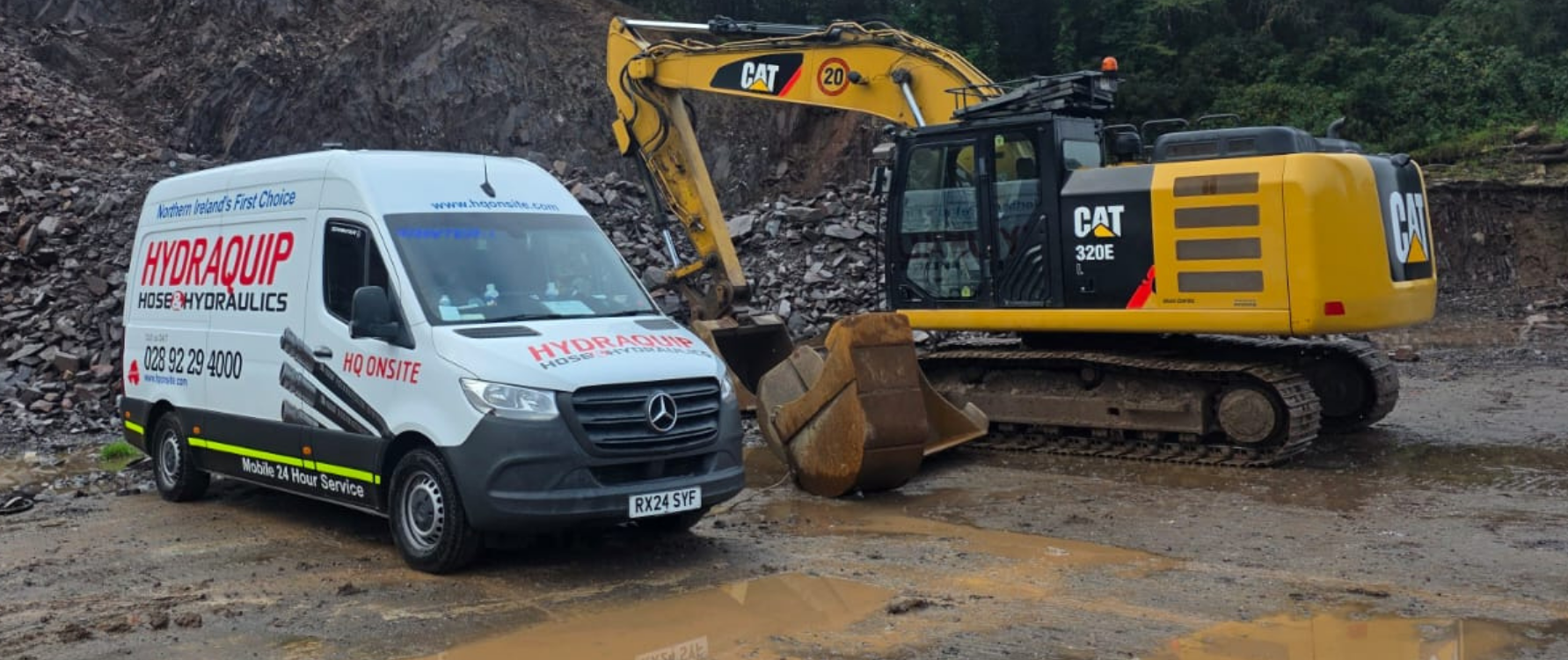
With trained engineers, fully equipped mobile service vehicles, and 24/7 availability, Hydraquip supplies and fits hydraulic hoses directly on site. Our engineers work within live industrial environments, assembling hoses to specification and ensuring systems are returned to service safely and efficiently.
Hydraquip’s Job Manager system provides clear visibility of call-outs, work completed, and asset history, supporting both maintenance and procurement teams. Whether responding to an emergency failure or supporting planned maintenance, Hydraquip delivers consistent, professional hose supply wherever it is needed across the UK.
Whether you’re dealing with an unexpected breakdown or reviewing how hoses are specified and managed across your site, Hydraquip Hose & Hydraulics provides a dependable, nationwide service built around speed, technical accuracy, and minimal disruption. When a hose fails, or when it’s time to take a more proactive approach, book a call-out via Job Manager or explore how our 24/7 mobile hose service supports industrial plants across the UK.

