Hydraulic Services for the Waste Management
When a refuse collection vehicle loses its compaction function halfway through a route, the problem doesn’t stop with that vehicle. Collections are delayed, schedules are pushed back, and pressure builds quickly across the operation.
That’s how hydraulic failure affects waste management. Whether it’s an RCV on daily collections, a hook loader moving containers, or fixed plant processing waste on site, hydraulic systems are doing the hard work all day under load. When they start to fail, the operational impact is immediate.
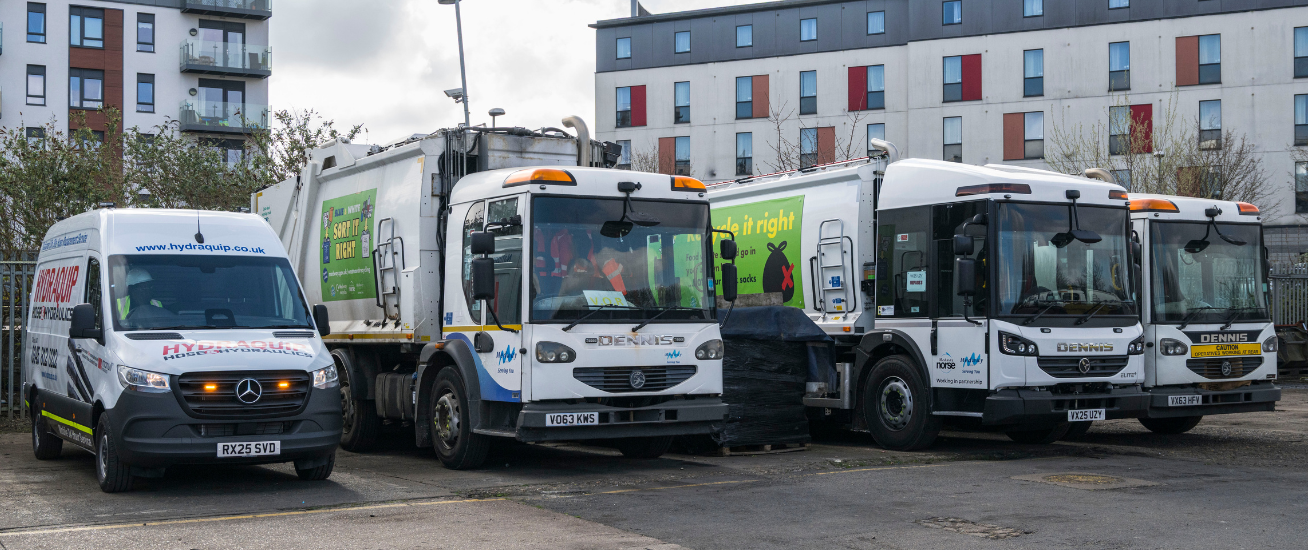
At Hydraquip, we support waste operators in exactly these conditions. We attend vehicles and plant that cannot afford to be down for long, and the priority is always the same: identify the issue quickly, repair it properly, and keep the operation moving.
Where are Hydraulics Used in Waste Management?
Waste management depends on repeatable movement in demanding conditions. Lifting bins, compacting waste, tipping loads, and handling materials all rely on hydraulic power being available when needed.
On the vehicle side, hydraulic systems drive bin lifts, compaction bodies, skip mechanisms, and hook loading equipment.
On processing sites, they support compactors, balers, grabs, and other material handling equipment.
These are not occasional-use systems. They cycle constantly, often in dirty, wet, and high-wear environments.
That level of use is what makes reliability so important. When a hose bursts or a valve starts underperforming, the issue quickly spreads beyond the machine itself. A vehicle may be unable to complete its route. A site may lose throughput. In contract-led environments, the consequences can also reach compliance, service levels, and customer expectations.
Where Failures Happen in Waste Equipment
Most waste equipment sees the same pressure points over time. The systems are built for heavy-duty use, but the operating conditions are hard on hoses, fittings, seals, and internal components.
Hydraulic hoses are still one of the most common failure points we see. On refuse vehicles in particular, hoses are exposed to repeated movement during lift and compaction cycles, along with vibration, road dirt, moisture, and debris. Over time, outer covers wear through, reinforcement becomes exposed, and failure follows.
Fittings are just as important. BSP, JIC, and metric connections all need to be correctly matched and installed to hold pressure and prevent leaks. A poor connection may not fail immediately, but it often becomes the cause of repeat issues later on. That is why Hydraquip engineers carry a broad range of hose types and fittings in the van, so assemblies can be matched properly on-site rather than patched up.
Beyond hoses and fittings, pumps, cylinders, and valves all take their share of wear. A worn pump may reduce available pressure. A leaking cylinder seal may weaken compaction force. A sticking valve may cause slow or erratic movement. In many cases, the early signs show up in performance before they become a full breakdown.
Fluid condition also plays a major part. Waste environments are harsh on hydraulic systems, and contamination is a regular issue. Dirt, moisture, and degraded oil reduce efficiency and wear internal components from the inside out. It is one of the main reasons systems start to lose reliability even when there is no obvious external damage.
How Hydraquip Supports Waste Operators
Waste fleets and processing sites do not run to convenient schedules, so hydraulic support has to be available when the job demands it.
Hydraquip’s 24/7 mobile hose repair service is built around that reality. Our engineers attend site with fully equipped vans, allowing hoses to be manufactured and replaced on-site without taking equipment back to a workshop. In many cases, the fault is diagnosed, repaired, and checked within a single visit, which keeps downtime to a minimum.
For waste operators managing multiple depots, routes, or facilities, consistency matters just as much as speed. Hydraquip provides nationwide coverage, giving businesses one support partner across multiple locations rather than relying on separate local providers with different standards and response models.
Our 95% first-time fix rate is also critical in this sector. Waste operations do not benefit from repeated visits for the same issue. Engineers arrive with stocked vans, technical knowledge, and the ability to identify whether the fault is isolated or part of a wider hydraulic problem. That makes the repair more reliable and reduces the chances of the same vehicle or machine failing again shortly afterwards.
Job Manager adds another layer of control. It gives waste operators visibility of every call-out, from job logging through to completion, with service records that help maintenance teams keep track of asset history and recurring issues.
Keeping Waste Operations Moving
In waste management, hydraulic failure is never just a maintenance issue. It affects routes, sites, service levels, and safety within minutes.
The businesses that keep moving are the ones with support in place that can respond quickly, repair correctly, and reduce repeat failures over time.
That’s where Hydraquip fits in. We support waste management operations across the UK with 24/7 mobile hose repair, experienced engineers, nationwide coverage, and the systems to keep call-outs and maintenance under control.
Explore how our 24/7 mobile hydraulic service supports waste management operations, or book a call-out via Job Manager to keep your fleet and equipment moving.

